

Why Pediatric Eye Exams Are So Important
Hopefully, by now, you know just how important it is to get your eyes examined regularly. While it can be annoying to add one more thing to your to-do list, an annual or biannual check-up can do a lot to preserve your vision long term. But when exactly should those regular eye exams start? The answer may surprise you – it’s actually very important to schedule pediatric eye exams for your baby, even right after they are born.
Of course, the last thing a parent is thinking about in the first few hours of their child’s life is getting their eyes checked. After all, the hospital performs a variety of checks to detect major health issues, and the parents are often themselves recovering from an exhausting ordeal. Your baby’s vision just isn’t the first thing that comes to mind.
And, for the most part, this is okay. The doctor or nurse will usually look for major issues, like blindness, in the first few hours of a child’s life. As you might expect, the eyes (like the rest of the body) are not fully developed at birth. Major (and minor) vision issues, if any, will develop with time. That’s why it’s so important to have your baby’s eyes checked regularly through infancy until they reach 18. Pediatric eye exams are crucial to ensuring that your child has good vision for life.
What Is a Pediatric Eye Exam?
As you might expect, a pediatric eye exam is an eye exam exclusively for babies. It’s important to know what goes on before your baby’s first eye exam so that you can be prepared. They will be slightly different than an eye exam for children.
Beyond the routine check at the hospital when they are first born, babies should get their first eye exam at six months old. This is because the eyes are actually one of the fastest-developing parts of the body. They will be able to see color and detect movement almost as well as an adult at this stage.
Six months is also a great age for doctors to detect whether the eyes are developing correctly. At this point, they can usually see any irregularities and start stepping in to treat them.
How Are Pediatric Eye Exams Performed?
We know how adults and young children get their eyes examined. You might get some puffs of air in your eye, or glaucoma-detecting eyedrops. Later, you’ll be asked a series of questions about which lens allows you to see more clearly. Obviously, this technique doesn’t work for babies. They can’t communicate like older children or adults can, so they need to rely on their parents to take care of their eye health.
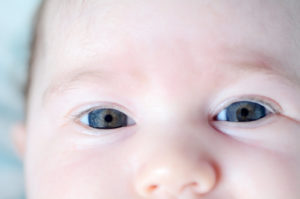
Babies have no reference point for what vision should feel like. Adults and even older children can recognize blurry vision because they know what good vision should look like. Babies can’t do that, nor can they usually communicate if their vision changes. If eye conditions are allowed to persist in babies, it will only lead to difficulty in school later as they get older.
But just what will happen during your pediatric eye exam appointment? Eye exams for kids and babies are pretty routine and noninvasive. Your doctor will check your baby’s eyes for signs of troubled vision and congenital eye conditions. They’ll also check the shape of the eye to make sure that it is developing healthily.
The appointment will likely start with your doctor asking you about your family’s vision history, so they know to look out for certain things. If you’ve adopted a baby and don’t know their biological family’s vision history, make sure your doctor knows this.
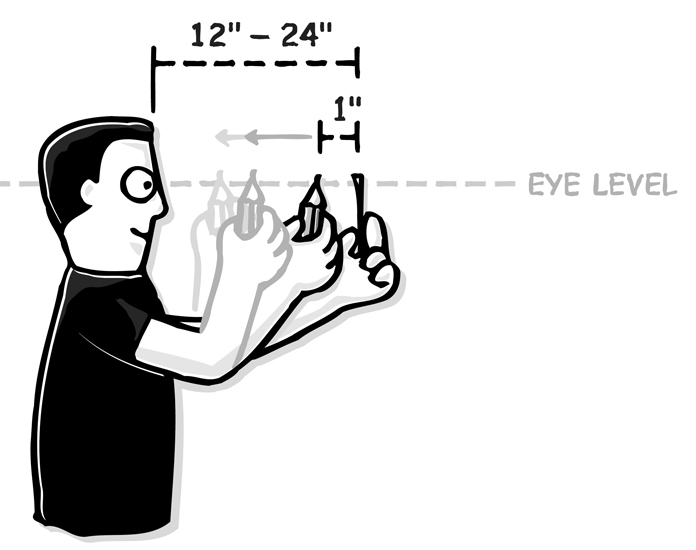
Then, the doctor will use a penlight to check for any irregularities. They will also test your baby’s focusing and tracking skills by watching if they can follow a toy as it moves in various directions. These easy tests will help detect any serious issues early on.
Pediatrician or Optometrist?
So, if you’re ready to schedule your child’s first eye exam, you may be wondering where you should make the appointment – the pediatrician or the optometrist? Well, that’s a tough question to answer, as professionals in both fields offer conflicting answers. It comes down to your personal preference.
A good pediatrician will be trained to recognize warning signs for troubled vision. If they suspect something is wrong, they will refer you to a specialist who can fully treat your baby. Many pediatricians agree that bringing your baby to an optometrist at such a young age is expensive for nothing.
Optometrists, on the other hand, tell a different tale. They claim that many pediatricians don’t have the proper training to carry out eye exams or simply don’t have time to do them. As a result, too many babies’ eyes go unchecked.
Whomever you choose to carry out your baby’s eye exam, one thing is for sure: your baby needs to have their eyes checked. If you come across a pediatrician who thinks eye exams aren’t important, consider finding one who does.
How Often Should Kids Get Eye Exams?
After completing your child’s first eye exam, your next question might be when you need to schedule the next one. A good rule of thumb is to have another exam done around age 3 and then again before they start kindergarten. After that, once a year is a good cadence. This will help you and your pediatric eye doctor catch any problems that develop as your kids grow and change.
Possibly more important than getting your baby’s eyes checked on a particular schedule is looking out for impaired vision warning signs. It all begins with you. If you spot anything fishy early, you may be saving your baby from a lifetime of poor vision.
Common Vision Problems to Watch Out For
First, you need to know that babies are still adjusting to the world around them. For the first three months of their lives, crossed eyes or trouble tracking movement are perfectly normal. Keep track of what you notice and let your doctor know at your first child’s eye exam.
Here are some other things to look out for:
- Your baby’s eyes don’t move together or don’t move normally
- After one month of life, your baby does not get distracted by lights, colors, or mobiles
- The lens of your baby’s eye looks cloudy
- Your baby rubs or squints their eyes frequently when not sleepy
- Your baby needs to tilt their head when looking at things
- Failure to track a moving toy after three months
If you notice any of these signs, talk to your pediatrician or optometrist about it.
Keeping your baby healthy now will set them up for a lifetime of good health. You can’t exclude the eyes. Remember that diet is important in building healthy vision as well. Once they reach childhood, it may be too late to fix vision problems that could have been fixed in infancy.



Comment