Free Shipping on Subscriptions
•

30-Day Money-Back Guarantee
Astigmatism, or irregular curvature of the cornea, is a fairly common refractive error. According to the Cleveland Clinic, about one-third of the global population suffers from astigmatism. Even though most people have probably at least heard of this issue, few are aware that there are different astigmatism levels.
As you might expect, these different levels correspond with the severity of symptoms associated with astigmatism. They also affect people differently, as most eye conditions present differently from person to person. Today, we’ll look at the different astigmatism levels, their symptoms, and some treatment options, including natural solutions. In most cases, you can do a lot to improve your vision without turning to extreme measures like surgery.
Knowing where you are on the astigmatism severity scale can help inform your treatment options and decisions. But before we dive into the different levels on the scale, let’s first talk about how astigmatism is measured.
Astigmatism is measured in diopters. A diopter is a unit of measurement for the focusing power of a lens, calculated as the reciprocal of the focal length in meters. A higher diopter value indicates a stronger lens that bends light more sharply, and a lower value means a weaker lens that focuses light further away. Diopters are used by eye doctors to prescribe corrective lenses for vision problems like myopia and hyperopia, and they also measure the power of lenses in cameras and microscopes.
So, how many diopters is okay? Typically, if your doctor has diagnosed you with astigmatism, they will place you somewhere on a scale that looks like this:
Mild astigmatism: 0.25–1.00 diopters. At this level, your vision will be so minimally distorted that you may not even notice.
Moderate astigmatism: 1.25–2.00 diopters. This level will cause noticeable bluriness in your vision, as well as possible eyestrain.
Severe astigmatism: 2.25–4.00 diopters. This level of astigmatism will significantly distort your vision. You will likely need corrective lenses to correct it.
Extreme astigmatism: 4.25+ diopters. This level indicates severe vision impairment that will require more intense treatment.
Just how severe your astigmatism is will, of course, determine what your options are. But before we discuss treatments and natural solutions, let’s talk about the different types of astigmatism.
Your type of astigmatism is a different classification from your severity of astigmatism. While the severity scale measures how intense your astigmatism is, your type of astigmatism measures how light is refracted in your eye because of its unnatural shape.
There are three main types of astigmatism: myopic, hyperopic, and mixed. If you’ve read any of our other blog posts, you’re likely familiar with the terms myopia (nearsightedness) and hyperopia (farsightedness). As you might expect, myopic astigmatism impacts your distance vision because it refracts light in front of the retina. Hyperopic astigmatism impacts your close vision because it refracts light behind the retina.
Mixed astigmatism, however, may sound more unfamiliar. If you suffer from mixed astigmatism, it means that one of your eyes is experiencing myopic astigmatism and the other is experiencing hyperopic astigmatism. This is the rarest form of astigmatism.
Regardless of whether you suffer from astigmatism or not (or whether you suspect you might), you should always prioritize regular eye exams in your life. This will help you catch vision conditions early.
Most astigmatism cases are present from birth, so visiting your eye doctor regularly won’t necessarily prevent you from developing this condition. However, it will help you and your doctor track whether your vision is worsening because of the shape of your cornea. You can then intervene if other factors are influencing the deterioration of your vision.
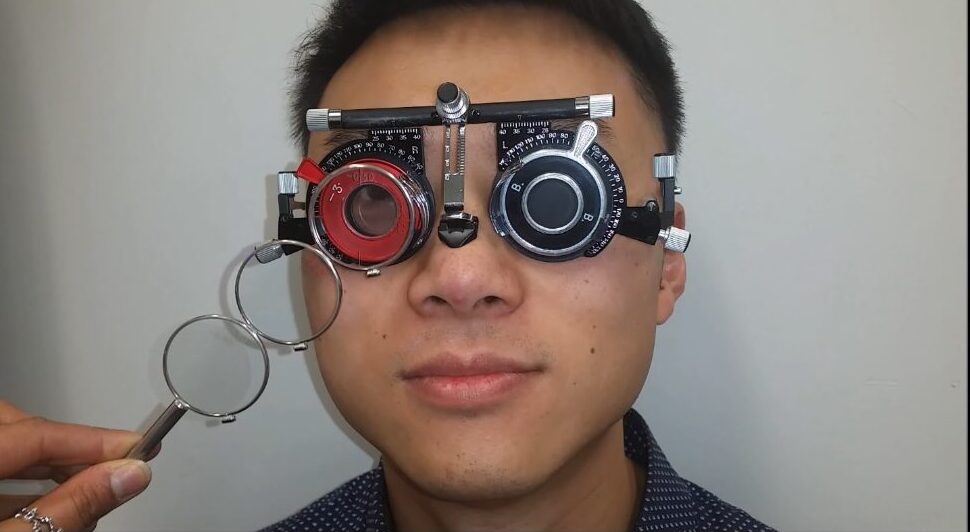
In your eye exam, your doctor will measure your eyeball to determine both the severity and type of astigmatism you have. They will use tools like keratometers, corneal topography, and refraction tests.
A keratometer is an optical instrument that measures the curvature of the cornea, primarily to assess astigmatism and aid in fitting contact lenses. It works by using the cornea as a convex mirror to measure reflected light. Corneal topography is a diagnostic test that creates a detailed map of the curvature and thickness of the cornea, the clear front window of the eye. A refraction test is an eye examination that measures how light enters and focuses within the eye to determine if there are any refractive errors. Together, all these tests can help you and your doctor create an informed treatment plan for your astigmatism.
Since astigmatism is most often a congenital condition, there isn’t really a way to fully reverse it or heal it. However, there are a number of possible treatments you can pursue to ensure that you still have clear vision.
If you’ve been diagnosed with mild astigmatism, usually, there isn’t much to worry about. You may opt for some corrective lenses if your vision is bothering you, but many people with mild astigmatism barely notice it. It’s still important to be regularly monitored by a doctor, however, to ensure your vision doesn’t worsen.
If you have moderate to severe astigmatism, your treatment will be a little more intense. You will almost certainly need some corrective lenses to give you clear vision. Often, these need to be custom-made, as your eye shape will be significantly different from the standard. Some people with this severity may also opt for refractive surgery, but we never recommend that here at Rebuild Your Vision because of the risk of side effects and complications.
If you have extreme astigmatism, your treatment options are more limited. There are specialized contact lenses that can help you see more clearly, but they aren’t always 100% effective. Luckily, this is a very rare severity of astigmatism, so hopefully you won’t face this problem.
It’s important to note that no natural solution can actually fix astigmatism’s root cause. Most often, you are born with the eyeball shape you will have for the rest of your life, and no amount of vitamins or eye exercises can physically alter the shape of your cornea.
However, that’s not to say that natural solutions won’t be helpful at all. Eye exercises can reduce eyestrain you may experience as a result of your astigmatism. Proper screen hygiene can also alleviate some of astigmatism’s worst side effects. A nutrient-rich diet, perhaps one that includes our Rebuild Your Vision Ocu-Plus Formula, can also limit some of the symptoms of astigmatism.
Regardless of your level or type of astigmatism, there are solutions out there that can help you still see clearly and enjoy a good quality of life. Make sure you visit your eye doctor regularly and keep up with your healthy habits, and you’ll continue to enjoy good vision – for life.