
Vision Training for Hockey Goalies
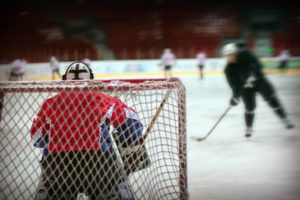
It’s no secret that hockey goalies need to be tough. From crouching on the ice for three periods of play to being willing to take a puck to any given part of their body (with padding, of course, but still), there’s a lot of tenacity when it comes to defending the hockey goal. But what about a hockey goalie’s vision? With such a small puck flying around the ice, vision training for hockey goalies is especially important.
While all hockey players could probably benefit from vision training, it’s the goalie who needs it the most. That kind of visual precision doesn’t come from doing squats or 30 minutes on the treadmill. It comes from very specific eye training and exercises. Today, we’ll talk about several different strategies for visual performance training for hockey goalies, as well as other ways they can ensure their vision stays sharp.
Vision Training in the NHL
Before we get into the specifics of how a hockey goalie can sharpen their vision, let’s focus on the why. Even in the NHL, hockey goalies recognize the importance of sports vision training. Former NHL goalie Braden Holtby famously said that the eyes were the biggest muscle for goalies, and he maintained an elaborate vision training routine before every game. Other stars like Connor Hellebuyck, James Reimer, and Johnathan Bernier also tout the importance of eye training for hockey goalies.
All players need to be focused, but the sole focus is on a small black puck, which can easily be lost in a goalie’s field of vision. Luckily, these players and many more have found success through adding specific vision training for hockey players. With a quick eye comes a quick hand, and therefore a quick save!
Eye Exams for Goalies
Before hockey players jump into vision training, though, they must take the first step: making sure their vision is healthy in the first place. While a normal eye exam is important for hockey players, their exams must also often go a bit deeper. Eye doctors for athletes look for very specific movements and conditions in goalies’ eyes. This will then make it easier to find the right training for each goalie.
There are four factors that doctors look out for when testing goalies’ eyes:
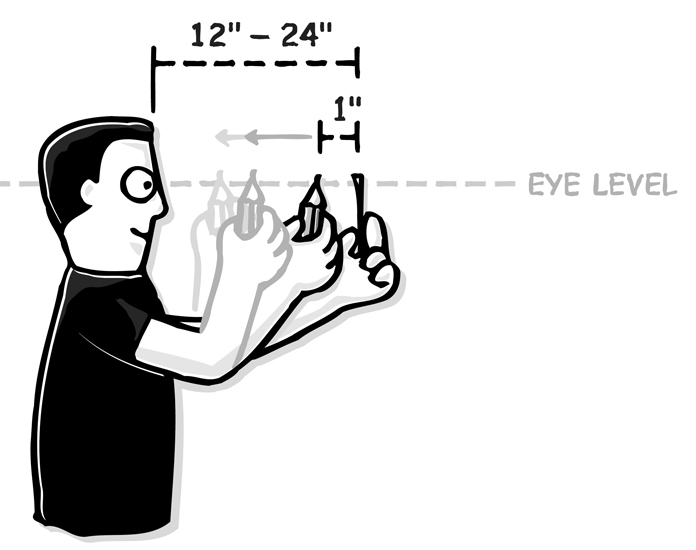
- converging on an object coming towards them
- diverging to see a bigger picture
- vertical movement
- tracking different movement patterns
All four visual tests require both eyes to work in tandem. If the player cannot complete these tests accurately, this most likely means the eyes are not performing at their best.
Josh Tucker tested one European goalie at Envision Sports in Minnesota, who immediately noticed something off in the goalie’s vision after starting the movement pattern test. Whenever the goalie would look to his low right, his eyes would jump. As a result, his eyes would skip over a whole part of the range of motion. This goalie needed specific eye exercises to help him overcome his movement pattern difficulties.
Different Vision Training for Hockey Players
No two goalies have the same vision, and so it follows that no two goalies should follow exactly the same vision training regimen. By working with a sports eye doctor or even their club’s athletic trainer, each goalie can ensure that they are working to sharpen vision in the most efficient way possible.
Part of Braden Holtby’s pregame warm-up is to warm up his eyes using a tennis ball to practice puck tracking. Juggling is one of his favorite eye-tracking exercises. To turn juggling into a vision training for hockey goalies exercise, keep your eye on the ball as it moves through the air in front of your face. It’s a fun addition to your at-home vision exercises that can make a big difference.
Vision training isn’t exclusively for pro athletes to use. Whether you’re an up-and-comer or have a little one just starting in little league hockey, it’s never too early to start vision training for hockey goalies.
Other Exercises
Strength and conditioning coach Maria Mountain specializes in off-ice goalie drills. She emphasizes the importance of not only having good hand-eye coordination as a goalie but also the ability to recognize and respond to patterns.
One eye exercise Mountain shares to improve pattern recognition is called “Juggling to Knee Down.” This exercise consists of juggling two tennis balls with one hand, as you lower yourself onto one knee, stand up, and then back down onto the other knee. This is repeated for five minutes (more than five minutes is not recommended). If you’re interested in having a visual, check out her video in the link above.
It’s important to notice that Mountain’s head stays relatively leveled as her eyes follow the ball. In doing this, she is ensuring that it is her eyes (and legs) getting the workout rather than her head or neck. This is what makes the exercise so effective. Not only does this help goalies with their vision training, but it also strengthens the quads!
Goalie training for vision doesn’t always have to have a physical component to it, either. Holtby has said that he would sometimes sit in the empty arena before a game and dart his eye across the ice. This helps him to improve both his speed and clarity while trying to spot the puck on the ice. Whatever exercise you try, you can see just how important vision training for hockey goalies is for a player throughout their career.
Vision Nutrition for Athletes
The connection between vision and sports performance is hard to deny. While eye exercises are an excellent way to improve vision and, therefore, improve sports performance, this is only part of the puzzle. Diet also plays a huge role in an athlete’s eye health. Vitamin A is known as a super nutrient for your eyes. Adding foods like carrots, spinach, cantaloupe, and sweet potatoes to your routine is the best way to add more of this nutrient to your diet. But vitamin A isn’t the only nutrient for the eyes – antioxidants, lutein and zeaxanthin, and vitamins C and E are especially good vitamins for athletes.
For a hockey goalie, taking care of the eyes is just as important as taking care of the rest of the body. By paying attention to proper exercise regimens and nutrition, hockey players will set themselves up well for a long, fun, and successful career.



Comment