

Understanding Carotenoids and How They Help Your Eyes
“Carotenoids” is a word thrown around a lot here. We’re the first to promote them for your eye health, but what are they exactly? It’s easy to recommend natural ways to improve your eyesight without any real proof, but we’re not a fan of smoke and mirrors here at Rebuild Your Vision, especially when it comes to your vision health. We want to make sure you fully understand the relationship between carotenoids and your eyes.
This is why we’ve put together this comprehensive guide with all the information you need to understand what carotenoids are, how they work, and how you can work to get the most out of your daily foods. The better you understand carotenoids, the better you can use them to your advantage.
What Are Carotenoids?
Simply put, carotenoids are responsible for the pigmentation of some of your favorite foods like carrots, squash, sweet potatoes, grapefruit and so much more! Foods colored bright red, yellow and orange are generally high in carotenoids. However, greens like spinach and kale are also contain a lot of carotenoids.
Carotenoids are part of a class of plant chemicals called phytonutrients. Don’t let the word chemical throw you; these are the good kind. The phytonutrients help the vegetable to absorb light for photosynthesis, an important part of a plant’s ability to harness sunlight and turn it into chemical energy.
These phytonutrients also have an essential antioxidant function: to fight free-radical in plants. Without these antioxidants, free radicals can cause cell damage in the plants, leaving us without the delicious veggies they produce.
Free radicals on their own can be a tough concept to grasp; in fact, we would need a whole other article to explain it in its entirety. We won’t harp on it too long. Free radicals form when oxygen cells react with certain molecules, causing damage to the plant’s DNA and cell membrane. This may cause cells to function poorly or even die.
Carotenoids are a crucial part of keeping plants and vegetables healthy; and in turn, they do the same for us.
How Do Carotenoids Work?
Carotenoids have many health benefits that extend past our eye health. They act as antioxidants in the human body. Certain types of carotenoids have cancer fighting and anti-inflammatory properties, which can also help fight heart disease. More importantly (for us anyway), certain carotenoids can be converted into vitamin A, an essential nutrient for our eyes.
There are over 600 types of carotenoids, all which serve a different purpose. There are two in particular that are most associated with eye health: lutein and zeaxanthin. They are the most important carotenoids to the eye because they are the only ones actually found in the retina.
In the eye, lutein and zeaxanthin play an important role in protecting the eye from blue light. This is the type of harmful light emitted from screens and various other sources of artificial lighting. Blue light can severely damage the retina if the presence of lutein and zeaxanthin is low.
Ingesting these two types of carotenoids also mean great health benefits for your eyes. According to the National Eye Institute, the addition of lutein and zeaxanthin to your diet can help decrease your risk of developing age-related macular degeneration (AMD). Though AMD affects most people over the age of 50, anyone of any age can benefit from these carotenoids preventative function. They can also help improve your eye function overall, especially in sports like hockey.
Beta-carotene
Beta-carotene is another star carotenoid that works wonders for the eyes mainly because it is provitamin A. If you’re an avid reader of our blog, this term should ring a bell. When a nutrient is provitamin A, it means that it is converted into vitamin A in certain organisms. In our case, beta-carotene is converted into vitamin A by our bodies.
As you know, vitamin A is one of the most important vitamins for keeping your retina in good health, thus boosting your overall vision. Of all the carotenoids, beta-carotene is the most powerful provitamin A, producing the highest amounts of vitamin A in the human body. Vitamin A can also help prevent cataracts, night blindness and dry eyes.
Foods High in Carotenoids Are Good for Your Eyes
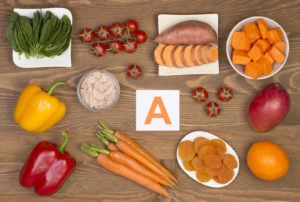 Plenty of your favorite foods are high in eyesight-saving carotenoids. The general rule of thumb is, the brighter the vegetable or fruit, the higher they are in carotenoids. However finding the right food can sometimes be hard, especially since there are just so many options. We’ve narrowed it down to our top five favorite carotenoid producing foods.
Add These Foods to Your Diet
- Sweet Potatoes: Sweet potatoes are highly underrated. They’re delicious and just as versatile as white potatoes when it comes to cooking them.
- Carrots: This comes as no surprise to anyone. Carrots have long been the vegetable everyone associates with vision health. You can eat them raw or cooked!
- Spinach: Sure, this next one isn’t brightly colored, but this one is an exception. Spinach is best known for its high content of vitamin A. Similar to spinach is kale, which (in larger quantity) may also get the job done.
- Sweet Bell Peppers: No matter the color of your sweet bell pepper of choice, they generally contain the same amount of carotenoids. Although if you want specifics, sweet green peppers contain a slightly higher carotenoid count than sweet yellow peppers.
- Dried Fruit: Good news for you, trail mix lovers, your favorite dried fruit may be saving your vision. Dried apricots, dried peaches and dried prunes are among the best dried fruit for your eyes. These are easy foods to take on the go if you don’t have the time to cook or are just looking for a light snack!
We’ve all experienced how hard it can be to eat healthy. Some weeks it’s just too time consuming to cook and measure out all your food. We have a suggestion when weeks like that come along: natural vitamin supplements. Supplements let you take your eye health into your own hands. Don’t let a busy schedule come between you and your vision health.
Carotenoids are essential to your eye nutrition. Next time you’re at the store, don’t skimp on the bright veggies. Your eyes will thank you.



Comment