

How to Prevent Eye Damage from Phones
What’s the last thing you do before you go to bed? What about when you wake up? For most people, it’s checking their phone. Whether you’re sending work emails or mindlessly scrolling through Instagram, it’s become normal to check our phones every chance we get. But what do phones do to our eyes?
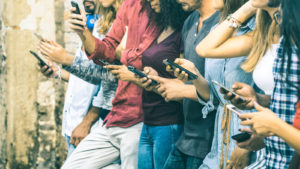
The digital age has brought us some awesome technological advancements, but they haven’t come without their downfalls. Today’s smartphone offers endless ways to work remotely, connect with friends and family, learn new hobbies and trades, and many other possibilities, but unfortunately, the amount of time spent staring at a screen can really take a toll on your eyesight. Learning how to prevent eye damage from phones, then, is key to maintaining healthy vision for life in the 21st century.
There’s no denying it; smartphones are powerfully entertaining devices. We depend wholeheartedly on our phones for socialization and organization. They’re our lifeline to other humans, without having to physically see another human. A recent survey found that over 43 percent of Americans feel addicted to their phones. And sadly, this reliance on digital devices means that a lot more people are going to be at risk of developing more serious vision conditions as they age. Luckily, there is a lot you can do to protect your eyes from screens.
How Does Screen Time Affect Your Eyes?
If you’ve ever worked on a computer for too long, you’ve probably experienced some fatigue in your eyes. Maybe your eyes hurt a little, or they struggle to focus as you are settling in with a book at the end of a long day. If this is a common occurrence for you, you may be suffering from digital eye strain.
But just what causes digital eye strain? Well, when your eyes are focusing on anything up close, not just your smartphone, the muscles contract. In short periods, this contraction is normal and healthy for your eyes. It becomes a problem when you’re focusing for too long on objects up close, like your smartphone.
Consider doing a low squat and holding it for the same amount of time you spend on your phone each day. The average person is on their phone for almost five hours a day, according to a recent study. Even if you could hold a squat for that long, your muscles would feel tired, cramped, and eventually give out. Eye muscles are similar in that they get fatigued and cramped from focusing up close for too long. You can understand why too much screen time on the eyes can cause headaches, soreness, dry eyes, and trouble focusing on objects farther away.
Another issue with screen time is the blue light that is emitted from smartphones, LED lights, and laptops. You’ve probably heard of this type of light before, but is blue light bad for your eyes?
What Is Blue Light?
Blue light is one of the colors that human eyes can see on the visible light spectrum. The spectrum has a wide array of colors with different wavelengths. When the wavelength is shorter, as it is in blue light, it has a more intense energy. Wavelengths that are longer have less intense energy. That intense energy can tire out your eyes, and too much exposure can cause damage over time.
It isn’t all bad, though.
Blue light is also a necessity for our bodies to function properly. The sun emits blue light, which mixes with the air molecules to give the sky its color. Daily exposure to natural blue light from the sun is crucial to maintaining our body’s circadian rhythm. It allows us to naturally produce melatonin, which signals our body to fall asleep. Exposure to a healthy dose of blue light can actually increase alertness and improve low moods.
Because blue light is part of the body’s circadian rhythm, or the rhythm that tells it when it should be asleep and when it should be awake, it makes sense that too much exposure to synthetic blue light from screens can disrupt sleep schedules. This is another way blue light can negatively impact your health, and another reason you need to protect your eyes from screens.
How Does Blue Light Affect the Eyes?
Now that we know a little bit about blue light, let’s get into the nitty-gritty of how it impacts vision and what you can do to prevent eye damage from phones. As we mentioned before, since the wavelength in blue light is shorter, it tends to flicker more than longer, less intense wavelengths. This flickering can cause a glare in your vision that reduces clarity. This means that objects in the distance might blur together, and it becomes harder to notice the contrast.
This glare can cause eyestrain and headaches. The longer you sit in front of your computer or scroll through your phone, the more likely your eyes are to become fatigued. Eventually, your vision will become impaired and require help to improve it. Some people assume they’re developing myopia because the glare has blurred objects in the distance; in reality, their eyes are combating the consequences of too much blue light exposure. It can even lead to irreparable retinal damage and increase the chances of developing age-related macular degeneration.
Blue Light and Macular Degeneration
Yes, unfortunately, too much blue light exposure can increase the risk of developing macular degeneration. This is because our eyes are naturally protected from UV and blue light by melanin. However, as we age, we lose melanin and become more vulnerable to damage. By the age of 65, half of our melanin protection in the eyes is gone.
Blue light is extremely dangerous to the retina, which increases the chance of developing macular degeneration. According to the American Macular Degeneration Foundation, blue light speeds up existing macular degeneration more than any other light on the visible light spectrum. With too much screen time, your eyes become vulnerable not only to degeneration but to glaucoma and cataracts as well.
Preliminary studies indicate that increased blue light exposure can indeed cause AMD to develop earlier. However, researchers also agree that more studies need to be done to fully understand how blue light impacts this disease and just how many hours of mobile usage are safe for the eyes in light of this.
Blue Light and Children
As you may expect, it’s especially important to protect your kids’ eyes from screens when they are young. This is because children’s eyes are still growing until about the age of 10. Until full development, their lenses can barely filter out UV rays, let alone blue light on the visible light spectrum. Too much exposure to blue light can cause a child to experience headaches, eye strain, and fatigue. It can also ruin their sleep schedule and cause sleep disorders.
Parents can protect their children’s eyes from blue light damage by limiting their screen time. Unfortunately, on average, most kids spend seven hours in front of a screen each day. It may not be for seven hours straight, but most parents use tablets and phones to distract their kids and entertain them more than they should, and this is on top of the screen time they are getting at school and for homework.
However, there is a lot you can do to protect your child’s eyes from phone and computer screens. Here are some effective ways parents can limit their child’s blue light exposure:
- No screen time within two hours of bedtime
- Regular breaks from screen time to go outside and utilize their distance vision
- Regular check-ups with an eye doctor to monitor their eye health and vision
- Reduce the brightness of the screen to the lowest it can be while still being able to see the screen without squinting
- Blue-light filtering glasses or screen protectors
Children’s eyes are more delicate and vulnerable to vision problems from blue light than adult eyes. It’s up to the parents to protect their kids’ vision, ensure their eyes are taken care of, and educate them on how to prevent eye damage from phones.
How Many Hours of Mobile Usage Is Safe for Eyes?
Not all is lost in the battle against blue light, though. You can do a lot to protect yourself and your loved ones from allowing phones to damage your eyes. While researchers don’t yet agree on just how many hours of screen time is safe for the eyes, as a general rule, limiting screen time to a few hours a day is helpful. Taking screen breaks, using downtime and social media limiting tools on your devices, and finding other, non-screen-related activities you enjoy can all help decrease how much blue light your eyes take in every day. These practices, combined with a healthy diet and exercise, can help preserve your vision in the long term.



Comment