
Chronic Fatigue Syndrome Symptoms and Your Eyes
If you’ve felt intensely tired for many months at a time, you’re not alone. It’s estimated that millions of people worldwide suffer from chronic fatigue syndrome, or CFS. However, the exact number is unknown because so many cases go undiagnosed. But what makes chronic fatigue syndrome different from just being tired? Well, it’s tiredness that lasts for more than six months and doesn’t improve with getting more sleep. It’s a problem that is difficult to solve and diagnose. Even more troubling is the connection between chronic fatigue syndrome symptoms and your eyes.
CFS can sometimes be hard to diagnose because the symptoms are common in many illnesses. It often presents like your typical virus, but it doesn’t go away. The eight main symptoms of chronic fatigue syndrome are extreme fatigue, sore throat, muscle pain, joint pain (without redness or swelling), headaches, memory or concentration problems, exhaustion lasting more than one day after physical or mental exertion, and enlarged lymph nodes in your neck or armpits. You can imagine how, with all of those symptoms, it would be difficult to ascertain what exactly is wrong.
There are also some other, less common symptoms that some people with CFS experience. These include the inability to think clearly, balance issues (dizziness/fainting), allergies (foods, medications), irritable bowels, chills and night sweats, mood problems (depression, anxiety, irritability), and visual disturbances (blurry vision or sensitivity to light). There are also certain vision-related symptoms of chronic fatigue syndrome. Overall, it’s important to know that this disease is not yet well understood. However, there is still a lot you can do to mitigate how CFS impacts your life.
Chronic Fatigue and the Eyes
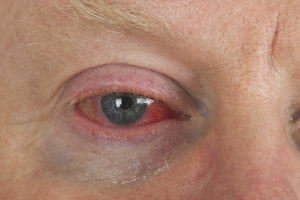
Even if we aren’t sure why, researchers know that there is a clear connection between chronic fatigue and the eyes. For example, people who suffer from CFS symptoms commonly report blurry vision, and some people also complain of itchy, watery eyes. It also seems there is a strong connection between chronic fatigue and dry eye. This is because the two diseases share underlying mechanisms like immune system dysfunction, chronic inflammation, and autonomic nervous system imbalances. Plus, people experiencing itchiness or dryness in their eyes often rub them, which only causes more redness and more discomfort.
Other vision issues include focusing difficulties, issues with tracking, light sensitivity, and even eye pain. It makes sense that chronic fatigue syndrome symptoms would include all these vision problems, since we all know how our eyes feel when we are overly tired. The problem with CFS, though, is that these symptoms persist for far longer than they should. You can try some eye exercises to help strengthen your focus muscles and mitigate some of these symptoms, but remember to seek medical attention as well.
Sufferers of CFS who have experienced any of the above problems should see a doctor for an examination. After studying many patients with CFS, doctors have found that patients also often suffer from poor oculomotor control. This means eye movements that are normally quick become slow and sometimes jerky. Sometimes it is difficult for a patient to move their eyes from one object to another. This can make everyday tasks like driving or cooking more challenging at best and dangerous at worst.
Another issue that doctors see in CFS patients is exophoria. This means that when one eye is covered, the other eye drifts outwards. Doctors also see restricted peripheral fields, low blink rates (and incomplete blinking), staring, small pupils, ocular surface abnormalities, abnormal tear film, and chronic allergic conjunctivitis. CFS symptoms can certainly make seeing difficult, but luckily, there are things you can do to make the symptoms less severe.
Getting Treatment for Chronic Fatigue Syndrome
If you’re suffering from a vision issue, your first thought is often to go to see an optometrist or ophthalmologist. These doctors can also be helpful for patients experiencing chronic fatigue syndrome symptoms that impact their vision. However, if your doctor’s first thought is to prescribe corrective lenses, you may want to take a step back and consider how much your vision fluctuates with your CFS symptoms. Some patients with this condition experience such rapidly changing vision that corrective lenses can’t keep up. Luckily, there are alternatives that can help with vision issues related to CFS.
For example, there are a number of things you can do to treat dry eye that often comes with CFS. Focus on hydration during the day, and add a warm compress if you feel especially sensitive. You should also avoid fluorescent lighting if you experience light sensitivity. Protecting your eyes by wearing sunglasses when you are outside is also a must, no matter the weather.
Patients complaining of itchy, watery eyes may also get some relief from over-the-counter antihistamines. Regardless of the symptom, the more tired the patient feels, the more likely their symptoms will be aggravated. Of course, vision-strengthening vitamin supplements can also be helpful when treating a variety of chronic fatigue syndrome symptoms. It’s also important to continue getting lots of rest and avoiding substances that make it difficult to do so, such as alcohol, nicotine, and caffeine. These are some of the easiest ways to treat eye problems associated with chronic fatigue.
Healthy Diet and Chronic Fatigue Syndrome
Healthy eating can heal the body of a multitude of ailments. Adding more vitamins and nutrients to your diet can certainly help alleviate chronic fatigue syndrome symptoms. A variety of studies have shown that nutrition is a key component in treating diseases like CFS. So, if you don’t think you can get all of the necessary vitamins and minerals into your diet every day, consider taking a supplement, such as the Rebuild Your Vision Ocu-Plus formula.
However, you should consult your doctor before beginning a supplement regimen. This is especially true if you are currently taking any medication to treat the other symptoms of chronic fatigue syndrome. You don’t want to accidentally combine supplements or medications that will counteract or even negatively affect each other.
Another way a CFS sufferer can help overcome their illness is to refrain from overdoing it mentally and physically. It is very tempting to do a lot on a day when you are feeling better, but you will probably pay the price for it later by exhausting yourself. Take it slow every day and enjoy the small victories you experience on the way. A rested CFS sufferer tends to go into remission sooner than one who continues to push themselves beyond their limit. Remission is the ultimate goal for most sufferers of CFS, because it means that you are now experiencing little to no symptoms of the disease.
So, how long does chronic fatigue syndrome last? Unfortunately, some sufferers report that it lasts for years, and others experience it for a lifetime. However, trying these tips and tricks to mitigate the associated vision symptoms can vastly improve your quality of life along the way. At the very least, treating some of the vision symptoms that come with CFS will allow you to continue to enjoy some of your favorite activities, regardless of your diagnosis.



Thank you for this article. I have not been diagnosed with CFS but have had a noticeably significant decline in energy from about ten years ago. Initially, I addressed burn out and adrenal fatigue by making lifestyle changes (doing less, getting better sleep, meditation, yoga, dietary changes). I feel much better overall but have still struggled with fatigue. I do have a progressively deteriorating hereditary eye disorder and am now eligible for corneal transplants. It was useful for me to make a connection to my fatigue, headaches, vision and the time it takes me to recuperate after particularly busy days or nights when I don’t sleep particularly well. I am now making even more efforts to care for my eyes.
Thank you so much for writing this article. I have chronic fatigue related vision challenges that greatly impact my ability to live a normal life. This article validates my eye problems (I’m not making it up!) But like others said, getting rest and lowering stress is vital but not easy to achieve with CFS. Especially when you are too sick to work a real job and don’t have a stable income. On top of illness you have to battle with poverty; you’re forced to overwork yourself for meager amounts of income, which doesn’t help to bring down the stress. It’s a sad reality for many living with chronic illness and I wish it was easier for them to get the assistance needed.
I agree with the above posts. The paragraph where you explain that we should remove stress from our lives and get a full nights sleep is something we crave on a daily basis. Insomnia is a symptom. Whether a sufferer is on the same end of the spectrum as me or sleeps 12-14 hours, we don’t get deep, refreshing sleep. We wake up feeling like we never slept. The paragraph that explains we should not tax ourselves mentally or physical is what we strive for. We call it pacing and try to live within our energy limits. Even when doing this, for some unknown reason we can fail and end in a crash for days, weeks or even months. I got sick when I was 29 and am now 61 years old. I have never had one day of full energy since getting sick. At best, I start the day with 60% energy and it may be zapped at anytime. It’s a constant battle just to get through the day.
I agree with the comments, I have had this illness now for 6.5 years, and although I have spent most of this time in bed, there is no sign of it giving me a break. At 65yrs, I feel there will be no enjoyment left in my life. I was a hard worker, had 5 children and still try to be a good wife. My biggest hurdle is trying to cook a good meal for my husband and me (without collapsing) as he can’t cook. he works full time, does all the housework, gardening and looking after me. he is 72, and I feel guilty because he is devoted to me. I also have migraines trice a week. This is the most difficult time of my life, the love of my friends and husband will keep me fighting this daily battle till they find a cure.
I’d say this is a fair response to an article that’s helpful, but also seems to imply that CFS is an easily fixable result of poor lifestyle choices such as alcohol, caffeine, and nicotine, which is very inaccurate. This is not to make a criticism of the article writer, who gives some very helpful, hard to find advice here. But CFS is difficult to write about because it’s often not recognized how severe and often untreatable the illness is. Other kinds of serious illness aren’t told to start seeing a difference in no time, and CFS should likewise be recognized as extremely serious. The friend we all know who recovered from chronic fatigue is the exception: the other 95% were in bed and we never had the chance to meet them, so we don’t realize how serious their illness is. There are debates about the appropriate name for the illness, but the fatigue symptom should be respected.
You said
Chronic Fatigue Syndrome (CFS) is an extreme fatigue that lasts more than six months.
This definition is just plain wrong. The primary symptom is cognitive dysfunction. It is a disease primarily involving inflammation and swelling in the brain. Secondary it becomes a systemic disease affecting every part of the body. There is a massive symptom list where fatigue is just one symptom. Very few if any body ever recovers from the disease. Pushing the F-word (fatigue) is trivializing the devastating disease.